I inherited a property in Spain but I live abroad
What you should consider if you have inherited a property in Spain and live abroad.
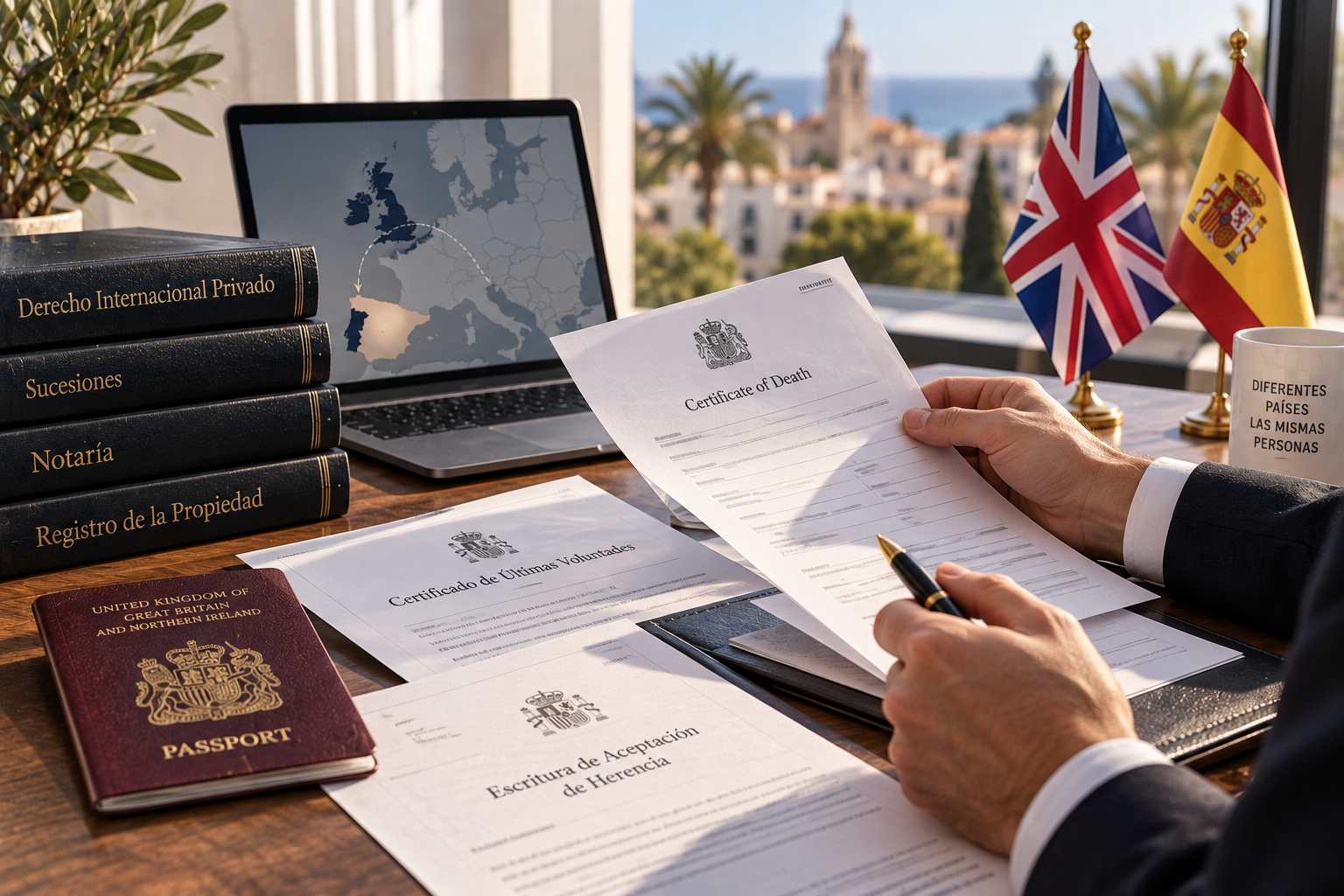
Inheriting a property in Spain while living in another country may seem complicated, but it is a fairly common situation.
The issue is not usually just the inheritance itself. Practical matters also arise, such as signing documents from abroad, obtaining an NIE, dealing with banks, paying taxes, coordinating with other heirs or deciding whether to keep or sell the property.
At the firm, we have seen many cases like this, and one of the first things we usually organise is representation for the heir in Spain.
Do I have to travel to Spain to accept the inheritance?
Not necessarily.
Many heirs live abroad and do not want or are unable to travel to Spain several times.
In these cases, a common solution is to grant a power of attorney so that a representative can carry out certain procedures on their behalf.
This can make matters such as the following much easier:
- signing documents;
- notarial procedures;
- dealing with banks;
- filing taxes;
- procedures relating to the property;
- coordination with other heirs.
The important thing is for the power of attorney to be properly prepared for the actions that will actually need to be carried out.
Do I need an NIE to inherit a property in Spain?
For many transactions connected with an inheritance in Spain, an NIE may be required so that the heir can complete tax, notarial or registry procedures.
It is therefore advisable to check from the beginning whether all the heirs already have an NIE or whether one will need to be obtained.
Leaving this until the end can significantly delay the case.
What taxes have to be paid?
An inheritance involving a property in Spain may create tax obligations.
These may include Inheritance and Gift Tax, although the specific tax treatment will depend on the heir's circumstances, the value of the assets and the applicable rules.
It is not advisable to calculate the tax simply on the basis of a percentage found online.
In an international inheritance, it is necessary to review carefully:
- who inherits;
- where the heir lives;
- the value of the assets;
- which rules apply;
- whether any reductions or allowances are available.
Banks can become a problem
This is one of the areas that causes the most practical difficulties.
When someone dies, there are often bank accounts, direct debits, loans or pending transactions.
And when the heirs live abroad, communication with the bank can become even more complicated.
In our experience, not all banks handle these cases in the same way or always explain clearly what documentation they require.
It is therefore advisable to gather all of the deceased's banking information from the outset and check what each institution requires.
What happens if there are several heirs?
If the property belongs to several heirs, they will need to decide what to do with it.
There may be different options:
- keep the property jointly;
- allocate the property to one of the heirs;
- sell it;
- reach another agreement between the parties.
Problems may arise if the heirs live in different countries or do not agree.
A property inherited by several people can quickly become a source of conflict if nobody wants to pay the expenses, one person wants to sell and another wants to keep it.
For this reason, it is important to clarify the decisions as soon as possible.
Can I sell the property even if I live outside Spain?
Yes. Living abroad does not necessarily prevent you from selling a property inherited in Spain.
But the inheritance and the legal status of the property will first need to be properly resolved.
The tax consequences of the sale and the seller's particular status as a resident or non-resident will also need to be reviewed.
If the heir does not want to travel to Spain, it may be possible to arrange certain steps through representation, depending on the case.
What documentation might be required?
Every inheritance is different, but documents that may be required include:
- death certificate;
- will, if one exists;
- documentation establishing who the heirs are;
- passport or identity document;
- NIE;
- title deeds for the property;
- Land Registry information;
- banking documentation;
- power of attorney, when used;
- tax documentation.
If some documents come from abroad, it will be necessary to check what requirements they must meet in order to be used in Spain.
Does inheriting a property give me the right to reside in Spain?
No.
Inheriting a property in Spain, even if it is of high value, does not in itself grant a residence permit.
This is important because for years there were residence routes linked to certain property investments, but that situation changed in 2025 for new applications.
Inheritance and residence are therefore two separate matters.
If a person wants to live in Spain after inheriting a property, they will need to consider which residence authorisation may be available according to their circumstances.
What mistakes should be avoided?
There are several mistakes that we see repeatedly in this type of inheritance.
Waiting too long to start
When an heir lives abroad, it can be tempting to leave the matter until later.
This can end up complicating taxes, documentation or management of the property.
Failing to prepare the power of attorney properly
A power of attorney that is too limited may mean that another document has to be prepared later.
It is advisable to define from the beginning which actions will be necessary.
Failing to check the status of the property
Before accepting or selling an inherited property, it is advisable to check:
- ownership;
- mortgages;
- charges;
- debts;
- Land Registry status.
Failing to coordinate all the heirs
When each heir lives in a different country, lack of coordination can make a simple procedure take much longer than necessary.
What would I do if I inherited a property in Spain while living abroad?
I would begin by gathering all the information before carrying out isolated procedures.
I would need to know:
- whether there is a will;
- who all the heirs are;
- what assets there are in Spain;
- the Land Registry status of the property;
- whether there are debts or mortgages;
- whether the heirs have an NIE;
- whether they will travel to Spain or need a power of attorney;
- whether they want to keep or sell the property.
With this information, the case can be organised correctly and many unnecessary procedures can be avoided.
Conclusion
If you have inherited a property in Spain but live abroad, this does not mean that you have to travel constantly in order to deal with the inheritance.
In many cases, a significant part of the procedure can be organised through representation.
The important thing is to review documentation, NIE, taxes, banks, the status of the property and possible agreements between heirs from the outset.
The better the case is prepared at the beginning, the fewer problems are likely to arise later.
Frequently asked questions
Do I have to travel to Spain to accept an inheritance?
Not always. Depending on the case, certain steps can be carried out through a power of attorney.
Do I need an NIE to inherit?
It may be required for various tax, notarial and registry procedures connected with the inheritance.
Can I sell the house from abroad?
It may be possible, provided that the inheritance has been properly formalised and the relevant requirements are met.
What happens if there are several heirs?
They will need to decide jointly what to do with the property and formalise the appropriate agreement.
Does inheriting a house allow me to live legally in Spain?
Not by itself. Ownership of a property and residence authorisation are separate matters.
Note: This content is for information purposes only. International inheritances may vary depending on the circumstances of the deceased, the heir and the assets.